
Fifty dollars a day in Cuba. Say that out loud and you’ll get two very different reactions — the seasoned traveler who nods slowly, and the skeptic who laughs. Both are almost right. This guide exists somewhere in between: a clear-eyed breakdown of where that $50 actually goes, what it buys you, and the handful of decisions that determine whether you finish each day with pesos in your pocket or quietly panicking.
Cuba’s biggest financial trap isn’t the prices — it’s the logistics. No working ATMs for foreign cards. No credit cards. No walking to a machine at 11pm because you underestimated dinner. Every dollar you spend in Cuba needs to be physically in your wallet before you board the plane. That single fact reshapes everything that follows.

Where You Sleep: The Decision That Defines Your Whole Budget

Accommodation is where $50/day budgets live or die. State hotels charge $60–150 per night for rooms that feel like a 1970s conference center — functional enough, but with a certain institutional dimness that no number of ceiling fans can fix. At those prices you’re already over budget before you’ve eaten breakfast.
The accommodation that makes this budget work — and makes the trip genuinely good — is the casa particular. A registered private home renting rooms to travelers. Legal since the 1990s and expanded steadily since. You’re sleeping in someone’s house, and that difference in experience is enormous.
In Havana, a solid private room in a casa particular runs $20–35 per night. For $25 you get a clean colonial-building room with air conditioning, a private or shared bathroom, and a host who’ll spend ten minutes over breakfast mapping out the best places to eat within walking distance — places that don’t appear on any tourist map. Outside Havana, in Trinidad, Viñales, Cienfuegos, or Santiago de Cuba, the same quality room drops to $15–25. These aren’t compromises. Some of the best accommodation experiences in all of Cuba happen in casas.
Most casas charge $5–7 extra for breakfast: fresh fruit, eggs cooked to order, toast, thick Cuban coffee, and usually fresh juice. It’s consistently better than anything you’ll find at a nearby café for the same price, and it buys you a 20-minute conversation with your host that’s worth more than any guidebook. Say yes to the breakfast.
A note on booking: Airbnb stopped transferring payments to Cuban bank accounts in early 2025, creating problems for many hosts. Some still work through the platform via intermediaries, but it’s patchy. Your most reliable options in 2026 are booking directly by email (contact details circulate through travel forums), using platforms that still function, or doing what experienced Cuba travelers have always done — ask your first casa host to refer you to a trusted casa at your next destination. This network runs the length of the island.
Eating Well in Cuba Without Paying Tourist Restaurant Prices

Cuba’s food situation has a trick at its center: the state-run restaurants that fill the main tourist squares — menus in four languages, laminated photos, tablecloths — are uniformly the worst food at the highest prices. The food worth eating in Cuba comes from two places only: private paladares and street food stalls. Both are cheaper than the tourist restaurants. Both are far better.
Street food is where the real saving happens. A pizza from a counter in Sancti Spíritus costs about 50 cents. A ham and cheese sandwich pressed through a window — $1. A cone of fried dough from a street cart, a fresh coconut water opened right in front of you, a scoop of ice cream from a local parlor — all of these land between $0.50 and $2. The cheapest full meal in Cuba is a plate of rice, black beans, and pork at a local comedor, which serves Cubans daily for $2–4. You won’t find these on Google Maps. You find them by walking away from the plaza and following your nose.
The best meal I had in Cuba cost less than $10 for two people — grilled lobster at an eight-table paladar down a residential alley in Havana Vieja. The tourist restaurant on the main drag was charging $28 for chicken. Cuba rewards wandering more than planning.
Paladares are private restaurants. They range from four plastic chairs and a blackboard menu to genuinely impressive dining rooms with wine lists. At the lower end, lunch at a good paladar runs $5–10 per person including one drink. At the top — La Guarida, San Cristóbal Paladar, Doña Eutimia — expect $15–25 per head for dinner. You don’t need to go to those places every night. The strategy that works: $3 street food lunch, $10 paladar dinner with one beer. That’s $13 for the day’s food before cocktails. Add two mojitos at a local bar — $4–8 — and you’re still under $22 total. Cocktails in Cuba are one of the great budget pleasures: $2–4 at most local bars, even at bars with genuine history attached to them.
Many casa owners offer dinner for $10–15 per person — home-cooked Cuban food that routinely outperforms any similarly priced paladar. Rice, beans, slow-cooked pork, fresh vegetables, fried plantains. Say yes to this at least once. It’s often the meal guests talk about for the rest of the trip.
Getting Around Cuba Without Burning a Quarter of Your Budget on Taxis
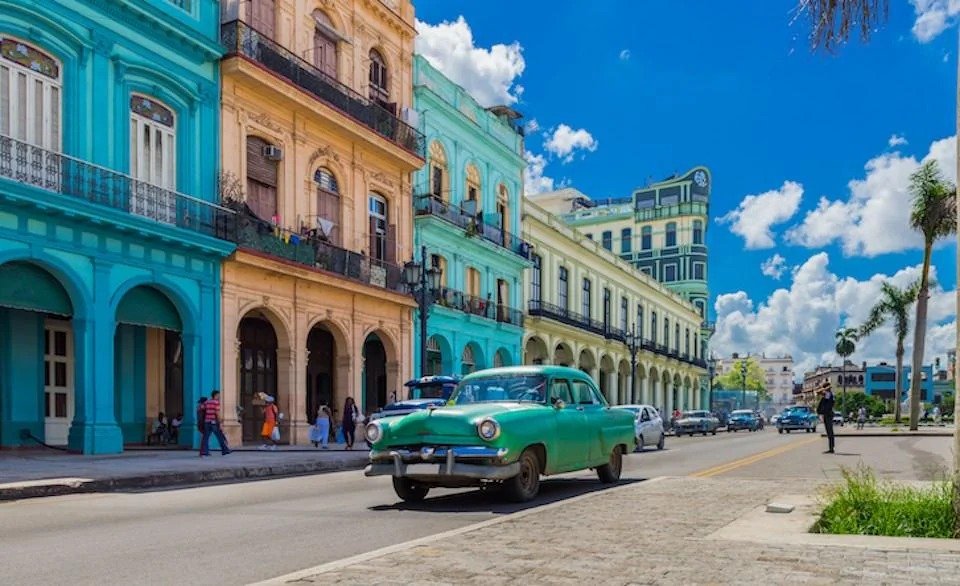
Within Havana, the city is surprisingly walkable. Old Havana, the Malecón, Centro Habana, and Vedado are all reachable on foot from a centrally-located casa. That walking costs nothing, and in Havana it’s also the best way to actually see things — the crumbling facades, the balcony conversations, the chess games in doorways, the smell of tobacco and sea air mixing on a narrow colonial street.
When you need to cover actual distance, the colectivo almendron is your answer. These are the famous shared rides in vintage American cars — 1950s Chevrolets, Buicks, Plymouths — that run fixed routes across Havana for $0.50–2 per person. Flag one down, name your general direction, squeeze in alongside four other passengers going roughly the same way, and you’ll be dropped somewhere near where you’re going. Efficient, cheap, and the closest thing to time travel you’ll experience in any city on earth.
| Route / Mode | Transport Type | Cost Per Person | Budget Rating | Notes |
|---|---|---|---|---|
| Within Havana (most trips) | Walking + almendron | Free – $1.50 | Best Value | Walk everything you can. Use almendrons for longer hops. |
| Within any city | Bici-taxi | $2–5 | Cheap | Negotiate before you sit down. Fun in the smaller cities. |
| Within Havana (longer) | Private taxi | $5–15 | Moderate | Always agree price upfront. No meters. Airport runs ~$25–30. |
| Havana → Viñales (2.5 hrs) | Viazul bus | $12 | Cheapest | Book ahead. Comfortable, A/C, reliable schedule. |
| Havana → Viñales | Shared colectivo | $15–20 | Moderate | Faster than bus. Split 4-5 ways it’s close to bus price. |
| Havana → Trinidad (5 hrs) | Viazul bus | $25 | Moderate | The essential Cuba journey. Book 2–3 days ahead in peak season. |
| Havana → Trinidad | Private taxi | $60–80 | Pricey | Only sensible split between 4+ people wanting flexibility. |
| Havana → Santiago (15 hrs) | Viazul bus | $51 | Moderate | Overnight option saves a night’s accommodation. |
| City vintage car tour (2 hrs) | Classic convertible | $50/car (up to 5) | Moderate | Split five ways = $10 each. Worth it once. Old Cars Havana is reliable. |
Cuba’s private taxis have no meters. At Havana airport especially, quoted fares for a simple ride into Old Havana can range from $25 to $60 depending on how confident the driver thinks you look. The correct fare from the airport to central Havana is $25–30. If someone quotes you $50, walk away. Your casa host can arrange an airport pickup at a fair price if you email ahead — always worth asking.
What to Do in Cuba When You’re Watching Every Dollar
Here’s something Cuba genuinely delivers that most destinations don’t: a remarkable chunk of what makes it worth visiting costs nothing. Not “free if you squint at it” free — actually free, with no catch.
The Things That Cost Nothing and Feel Like Everything
The Paid Experiences Worth Budgeting For
When you do open your wallet for activities, the numbers are genuinely reasonable. The Museum of the Revolution in Havana — housed in Batista’s former presidential palace, covering Cuba’s modern history with an unapologetic perspective — charges around $8. It’s one of the more thought-provoking museums you’ll visit anywhere. Budget for it. The Hemingway Museum at Finca Vigía, where he wrote For Whom the Bell Tolls and lived for twenty years, costs about $5.
Live music venues charge $3–10 as a cover or drink minimum. Casa de la Música, Casa de la Trova in Trinidad and Santiago, and countless smaller clubs across the country operate at prices that feel almost absurdly low for the quality of what you’re hearing. A salsa lesson runs $10–20 per hour from a proper teacher. Take one during the day, then go back to the same venue at night and use what you learned. The lesson pays for itself three times over in enjoyment.
A Full Day in Havana, Line by Line
Budget tables are useful. A real day with real costs is more useful. Here’s a Tuesday in Havana that covers a museum, a proper dinner, and live music — the kind of day people fly to Cuba for — itemized down to the last peso equivalent.
That came in at $62.50 — over the $50 target by about twelve dollars. The museum and the music evening are responsible for most of the overshoot. On a day with neither of those, you land well under $50. On a day you take a Viñales tour, you spend $80+. The budget works across a week by averaging the heavy days and the light ones — which is exactly how real travel budgeting functions everywhere, not just Cuba.
The Cash Problem: Cuba’s Financial Reality in 2026

No topic causes more last-minute Cuba panics than money logistics. The situation in 2026 is straightforward to understand and uncomfortable to accept: there are no ATMs that reliably accept foreign cards. US cards are blocked entirely. European and Canadian cards work at some ATMs in some cities — but building a trip around “some ATMs in some circumstances” is how people end up borrowing money from strangers at their casa.
The only strategy that works is carrying your entire trip budget in cash, in a currency that converts well. Euros are best. Canadian dollars are strong. British pounds work. US dollars are accepted widely but exchange at a slight penalty versus euros.
Larger bills exchange better. €100 notes get noticeably better rates at CADECA exchange bureaus than €20s. Exchange some at CADECA for certainty, and use your judgment on the informal market which offers better rates but comes with the usual uncertainty of informal markets. Most experienced Cuba travelers split the difference. Whatever you do, don’t exchange at your hotel — hotel exchange rates are the worst option available to you.
This is the single piece of advice that separates travelers who loved Cuba from those who spent half their trip anxious. Power cuts happen. Plans change. You find a day tour you want to do on short notice. You discover a paladar that deserves a proper dinner with wine. Cuba rewards spontaneity — but spontaneity in a cash-only country requires a buffer. Running out of money in Cuba is a significantly bigger problem than running out in most destinations. There are no easy solutions once you’re there.
Cuba switched from the paper Tourist Card to a mandatory digital e-visa from January 1, 2026 — applied for online before you travel. Cost varies by nationality and where you buy it. US travelers must declare an OFAC travel category (most use “Support for the Cuban People”). Travel insurance is also required at the border — not recommended, actually required. Factor both into your total Cuba budget separately from the $50/day in-country target.
Daily Cost by City: Where Your Money Goes Further
Havana is Cuba’s most expensive city. Not outrageously so by Caribbean standards, but noticeably more than everywhere else on the island. Leave the capital and costs drop meaningfully across accommodation, food, and transport. The Cuba outside Havana is also, in many travelers’ view, the more interesting Cuba.
How Much Cash to Bring for Different Trip Lengths
These figures cover in-Cuba spending only — not flights, insurance, or the e-Visa. They assume casas, Viazul buses, street food plus one paladar dinner daily, and a handful of activities. The 20% buffer is not optional. Cuba will use it.
| Trip Length | Daily Budget | Base Total | + 20% Buffer | Bring This Much | Includes |
|---|---|---|---|---|---|
| 5 days | $50 | $250 | $50 | $320 | Havana only, easy pace |
| 7 days | $50 | $350 | $70 | $450 | Havana + Viñales or Trinidad |
| 10 days | $50 | $500 | $100 | $650 | Havana + 2 other cities |
| 14 days | $50 | $700 | $140 | $900 | Full western Cuba loop |
| 21 days | $50 | $1,050 | $210 | $1,350 | Full island + Santiago |
Flights from Europe to Havana: €400–700 return. From North America: $300–600. Cuba e-Visa: $20–50. Travel insurance (required): $50–120 depending on length and coverage. Add these to your total trip budget before calculating how much cash to carry. None of them count against your $50/day in-country target.
12 Decisions That Determine Whether $50/Day Holds
- Eat where the steam is coming out. A window with food being cooked fresh and a line of Cubans waiting is the most reliable signal for good cheap food in this country. If the menu is laminated and in English, keep walking.
- Walk before you consider a taxi. Old Havana is genuinely walkable. So is most of central Trinidad, Viñales, and Cienfuegos. Every walk you take is cash that stays in your pocket for something worth spending it on.
- Take Viazul between cities, full stop. Yes, it’s slower than a private taxi. Yes, there’s occasionally no air conditioning. But it’s a fraction of the cost, reliably punctual, and you meet other travelers who’ve figured things out that you haven’t yet.
- Book casas well ahead in November–February, and negotiate on multiple nights in low season (May–October). Three or more nights in the same casa almost always earns a small discount if you ask directly. The owner would rather have the certainty than hold out.
- Buy rum and beer from a local tienda, not a hotel bar. A bottle of Havana Club 3-year from a neighborhood shop costs $4–6. The same rum served as two cocktails at a hotel bar costs $15+. Do that math every time you’re thirsty.
- Share everything that can be shared. Taxis between cities, day tours, convertible car tours. The per-person cost of a $50 car tour splits to $10 when five people go together. Ask your casa host if other guests are going in the same direction. They usually know.
- Tell your host your budget honestly. Experienced casa hosts have usually spent their lives navigating resource constraints more challenging than a traveler on $50 a day. Tell them what you’re working with. They will find you paladares, markets, and free experiences that no guidebook lists.
- Bring snacks for long Viazul journeys. The bus stops at roadside tiendas where tourist-facing snacks cost two or three times the in-city price. Pack fruit, crackers, and water from a Havana market before you board. You’ll be glad you did somewhere around the three-hour mark.
- Tip modestly but consistently. Cuba’s service workers rely on tips in a way that’s structurally different from most countries. A $1–2 tip to your casa host, paladar staff, or street musician matters significantly. It’s already built into the budget breakdown above. Don’t skip it.
- Avoid the restaurant tables facing the main plaza. In every Cuban city, the restaurants positioned for maximum tourist visibility on the main square are the worst food at the highest prices. The rule is nearly universal. Walk one block in any direction. The price drops, and the food usually improves.
- Take the overnight bus to Santiago if you’re going. The overnight Viazul journey saves a night’s accommodation cost and a day of transport budget. You arrive stiff but $20–25 richer. That’s a full day’s activity budget recovered from a decision about which bus to take.
- Say yes to the casa dinner. Home-cooked dinner at your casa for $10–15 per person is almost always better food at a lower price than a comparable paladar. Some of the most memorable Cuba meals happen at a kitchen table with the host’s family passing dishes across. Budget at least a few of these into your trip.
Is $50 a Day in Cuba Actually Realistic?
Yes — with the right understanding of what that means in practice. A $50 day in Cuba is not a day of deprivation. It includes a private room with air conditioning, three meals, movement around the city, and at least one paid experience. What it doesn’t include is a room at the Hotel Nacional, a private taxi everywhere, and dinner at La Guarida every night.
The travelers who hit $50/day consistently are the ones who lean into what Cuba actually rewards: street-level curiosity, shared transport, eating where locals eat, spending evenings at a neighborhood music venue rather than a hotel bar. The ones who struggle are the ones trying to maintain mid-range-trip comfort on a budget-trip wallet.
Cuba on $50 a day isn’t about cutting corners — it’s about spending money where Cuba is extraordinary and skipping it where Cuba is just average. The music is extraordinary. The street food is extraordinary. The conversations that happen when you slow down enough to have them are extraordinary. None of those things cost very much at all.
One final honest note: Cuba’s economy shifts in ways that are difficult to predict from outside the country. The exchange rate fluctuates, the availability of goods in shops changes, and prices that hold steady for months can shift suddenly. The numbers in this guide reflect 2026 traveler-reported costs and are accurate as a baseline — but build flexibility into your planning. Cuba doesn’t punish travelers who arrive well-prepared. It does punish those who arrive with exactly the right amount of cash and no room to adjust.
