

Luxury Travel to Cuba from Canada: What to Expect and What to Book
Canadians have a distinct advantage in Cuba that almost no other nationality shares. No OFAC restrictions, direct flights from six Canadian cities, and a currency that converts favorably. Here’s how to use every bit of it.

Luxury Travel to Cuba from Canada: What to Expect and Book
Direct flights, no OFAC complications, and a dollar that converts well. Canada is the easiest jumping-off point for luxury Cuba travel in the world.
Canada and Cuba have one of the longest-standing tourism relationships in the Western Hemisphere. While US travelers spent decades navigating OFAC license categories and cash logistics before they could step foot on the island, Canadians were already spending winters in Varadero, booking direct flights out of Toronto, and leaving reviews on TripAdvisor from the pool bar at the Meliá Las Américas. The relationship is deep, comfortable, and well-supplied with direct routes.
What hasn’t been written about as clearly is the luxury end of that relationship. Most coverage of Canadian Cuba travel defaults to the all-inclusive package tourist: two weeks in Varadero, wristband on arrival, seafood buffet every night. That’s a valid holiday and a lot of Canadians take it and love it. But Cuba at the luxury level is a genuinely different proposition — one that, for Canadians, comes with fewer logistical complications than for almost any other nationality attempting the same thing.
This guide covers the full picture: flights from every Canadian gateway city, entry requirements specific to Canadians, the best luxury hotels and private villas in Havana and beyond, the luxury resort options along the coast, and the experiences — yacht charters, private classic car tours, cigar master classes — that put real money to better use than a premium room upgrade.
Why Canadians Have the Best Deal in Cuba Luxury Travel
The Canadian advantage in Cuba tourism is not accidental. Canada maintained normal diplomatic and trade relations with Cuba throughout the entire Cold War period and has never imposed the trade restrictions that characterize the US relationship with the island. The result, seventy-plus years later, is a tourism infrastructure specifically calibrated to Canadian travelers: direct routes from six Canadian cities, tour operators who have been running Cuba programs since the 1970s, resort brands that built their first Cuban properties explicitly to serve the Canadian winter-escape market, and a Cuban hospitality industry that is genuinely accustomed to Canadian guests in ways that it has only recently become accustomed to Americans.
For luxury travelers specifically, the Canadian advantage breaks down into three concrete benefits:
- No OFAC restrictions. US citizens traveling to Cuba operate under a complex legal framework administered by OFAC (the Treasury Department’s Office of Foreign Assets Control). They must travel under a specific license category, their activities must comply with those category requirements, and their ability to bring home Cuban goods is regulated. Canadians face none of this. You can travel to Cuba for pure leisure, book whatever hotel you want, spend money wherever you choose, and bring home as many cigars as you can legally carry without any additional federal regulatory framework to navigate.
- Canadian dollars convert favorably. Among the currencies accepted without penalty at Cuban exchange bureaus, the Canadian dollar is one of the most favorable. The 10% penalty that applies to US dollars does not apply to CAD. Exchanging Canadian dollars at CADECA bureaus gives you the full market rate. For a luxury trip involving significant cash expenditure — hotel supplements, private tours, restaurant tabs, cigar purchases — this differential adds up meaningfully over seven to ten days.
- Direct, affordable routes from multiple Canadian cities. Air Canada, WestJet, Sunwing, and Air Transat all operate direct or near-direct Cuba routes from Toronto, Montreal, Calgary, Vancouver, and other Canadian gateways. Charter pricing through Sunwing and Air Transat can put a round-trip seat to Varadero at under $500 CAD in off-peak periods. Even premium economy seats from Toronto to Havana on Air Canada — a 3.5-hour flight — cost a fraction of a transatlantic luxury flight. The proximity and affordability of the route means the flight budget doesn’t need to dominate the trip budget.
“When a Canadian books a luxury week in Cuba, they’re doing it with no regulatory overhead, competitive exchange rates, and a shorter flight than most Canadians take to Europe. That’s a very good deal.”
Getting There: Canadian Routes to Cuba in 2026
The Canadian Cuba route map has expanded substantially since 2022. Here’s the current picture:
| Departure City | Destination | Airlines | Flight Time | Frequency |
|---|---|---|---|---|
| Toronto (YYZ) | Havana (HAV) | Air Canada, Sunwing, Air Transat | 3.5 hrs | Daily |
| Toronto (YYZ) | Varadero (VRA) | Sunwing, Air Transat, WestJet | 3.5 hrs | Daily (peak), 3–4×/wk (off-peak) |
| Montreal (YUL) | Havana (HAV) | Air Transat, Air Canada | 4 hrs | Daily (peak), 5×/wk (off-peak) |
| Montreal (YUL) | Varadero (VRA) | Air Transat, Sunwing | 4 hrs | 3–4×/wk (peak) |
| Calgary (YYC) | Varadero (VRA) | Sunwing, WestJet Vacations | 6.5 hrs | Weekly (peak season) |
| Vancouver (YVR) | Varadero (VRA) | Sunwing Charters | 7.5 hrs | Select peak weeks |
| Ottawa (YOW) | Varadero (VRA) | Sunwing, Air Transat | 3.5 hrs | Select weeks |
| Halifax (YHZ) | Varadero (VRA) | Sunwing | 3.5 hrs | Select peak weeks |
Upgrading the flight experience
Most direct Cuba flights from Canada are operated by charter airlines (Sunwing, Air Transat) on narrow-body aircraft that don’t have premium cabin configurations. For a genuine luxury travel experience, the Air Canada and Air Transat scheduled services on the Toronto–Havana and Montreal–Havana routes offer business/premium economy upgrades that are worth considering. Air Canada’s Premium Economy on the YYZ–HAV route — wider seats, better meals, priority boarding — adds $300–600 CAD to a return ticket and makes a meaningful difference given that Cuba’s internal transport still runs on local timing and you’ll want to arrive rested.
Alternatively: Toronto–Havana is 3.5 hours. A comfortable economy seat with a neck pillow and good noise-cancelling headphones achieves approximately the same result for considerably less money, which leaves the upgrade budget for the property itself.
Entry Requirements for Canadians: Simpler Than Almost Anyone
Canadian entry to Cuba is among the most straightforward of any nationality. No visa required in the traditional sense — just the Cuba e-visa (which replaced the old tourist card in 2025), the D’Viajeros digital declaration form, and proof of travel insurance. That’s the complete list for leisure travel. No special license categories, no activity restrictions, no documentation of what you spent or where.
- Cuba e-visa: Apply at evisacuba.cu at least 7 days before arrival. Valid for 30 days, extendable once in Cuba for an additional 30 days. Cost approximately $25 USD equivalent. Some Canadian airlines (Air Canada, Air Transat) include the tourist card in certain fare bundles — check at booking.
- D’Viajeros form: Complete at dviajeros.mitrans.gob.cu no earlier than 7 days before arrival. Generates a QR code; have it saved offline on your phone and printed as backup.
- Travel insurance: Cuba legally requires visitors to have travel insurance with medical coverage. Cuba requires it; your Canadian provincial health plan doesn’t cover you adequately internationally. Bring documentation of your policy.
- Passport: Valid for at least 6 months beyond your arrival date.
One Canada-specific note: Cuban immigration does not stamp Canadian passports. Cuba stamps a separate piece of paper that is kept inside your passport during your stay and surrendered on departure. This has been a feature of Cuban immigration since the era when some travelers didn’t want their passport stamped with evidence of a Cuba visit. It’s irrelevant for Canadians legally but still the practice. Your passport returns unstamped.

Luxury Hotels in Havana: The Top Tier
Havana’s luxury hotel market is smaller than the city’s reputation might suggest. There are many historic and atmospheric hotels in the capital; there are far fewer that deliver the combination of history, comfort, and consistent service that the luxury tier requires. The four below are the genuine first choices for Canadian travelers spending at the premium end.

The Kempinski was built inside the restored shell of the 1917 Manzana de Gómez commercial arcade and opened in 2017 as Cuba’s first internationally managed five-star property. For Canadian luxury travelers accustomed to Fairmont or Four Seasons standards, this is the closest available equivalent in Cuba. The 246 rooms and 30 suites are furnished to genuine luxury specification — high-quality linens, proper bathroom amenities, quiet and efficient air conditioning, real blackout curtains. The rooftop pool, the spa, and the Mojito Bar on the second floor of the arcade atrium are all operated at the level the Kempinski brand requires.
The building’s history is interesting without being heavy: the Beaux-Arts commercial arcade is architecturally distinctive, and the common areas retain the iron-column gallery structure of the original 1917 design. Canadian guests specifically appreciate the bilingual (Spanish/English) service standard, which is more reliable here than at any other Havana hotel. Canadian dollars are accepted at the front desk at competitive rates, and the concierge team is accustomed to organizing classic car transfers, private tour guides, and dinner reservations at the better Vedado paladares without the frictions that can arise at state-run properties.

The Nacional has hosted every significant visitor to Havana since 1930 — Winston Churchill, Nat King Cole, Frank Sinatra, the entire leadership of American organized crime at the 1946 Havana Conference. For Canadian travelers who want to sleep inside Cuban history rather than simply near it, the Nacional is the choice. The sea-view rooms on the upper floors look north across the Malecón toward the Florida Straits, and at sunrise and sunset the light on the water is extraordinary.
The Nacional is Gaviota-managed state property, which means the service consistency is lower than the Kempinski and the maintenance quality is variable. The rooms at the Nacional range from well-maintained and atmospheric to showing their age. Book a sea-view junior suite on the sixth or seventh floor for the version of the Nacional that justifies the price. The garden terrace for evening cocktails — looking out over the Malecón with Havana spreading east and west — is the essential experience. The sala de historia documents the hotel’s extraordinary past with photographs and artifacts that are genuinely worth an hour.
Luxury Resorts: Varadero, the Cayos, and the Best All-Inclusives
Canada built the Varadero all-inclusive industry. That’s only slightly hyperbolic. Canadian tour operators and resort brands have been running package holidays to Varadero since the late 1970s, and the beach strip at Varadero — 20km of white sand on a narrow peninsula north of the main Cuban coast — was developed with the Canadian winter market explicitly in mind. At the luxury end, several properties have genuinely premium facilities.

The Meliá Varadero sits on one of the broader and better-maintained stretches of the beach strip, and the Spanish management brings a service consistency to the all-inclusive format that the purely state-managed properties typically don’t achieve. The premium rooms — particularly the Meliá Level suites with dedicated check-in, upgraded amenities, and private area access — are the version worth booking if budget allows. The standard rooms are fine; the Meliá Level upgrade is the version that justifies the luxury classification.
The beach itself is Varadero’s strongest argument — calm, warm, clear water, soft white sand — and the Meliá positions you directly on the better part of it. Multiple pools, several restaurants with varying quality (the buffet is adequate; the à la carte specialty restaurants are worth booking on arrival), and a spa that delivers reliably if not exceptionally. Varadero’s core limitation is that it’s a resort strip, not a city — for evenings, you’re within the resort perimeter. For Canadians on a beach holiday, that’s the intended format.
The Cayos: Cuba’s premium beach alternative to Varadero
For Canadian travelers who want the reef-edge beach experience without the Varadero strip’s density, the northern cayos — Cayo Coco, Cayo Guillermo, and Cayo Santa María — offer a genuine alternative. The beaches here are quieter, the coral is more intact, and the setting is more dramatically Caribbean. Flights from Toronto and Montreal reach Cayo Coco Airport (CCC) directly, making it as accessible as Varadero for charter packages. The premium resort options are more limited in variety than Varadero but the Iberostar and Meliá properties on Cayo Coco deliver comparable facilities in a more exclusive setting.
Private Villas and Bespoke Stays
The private villa market in Cuba has expanded significantly since 2015 and has become genuinely interesting at the premium end. Several large historic properties — colonial mansions in Old Havana, tobacco farm estates in Viñales, beachfront compounds on the cayos — are now available for exclusive hire through specialist operators. These are not the casas particulares of the budget market; they are the historic buildings that survived the twentieth century in private or semi-private hands and are now accessible to visitors who can pay for exclusivity.

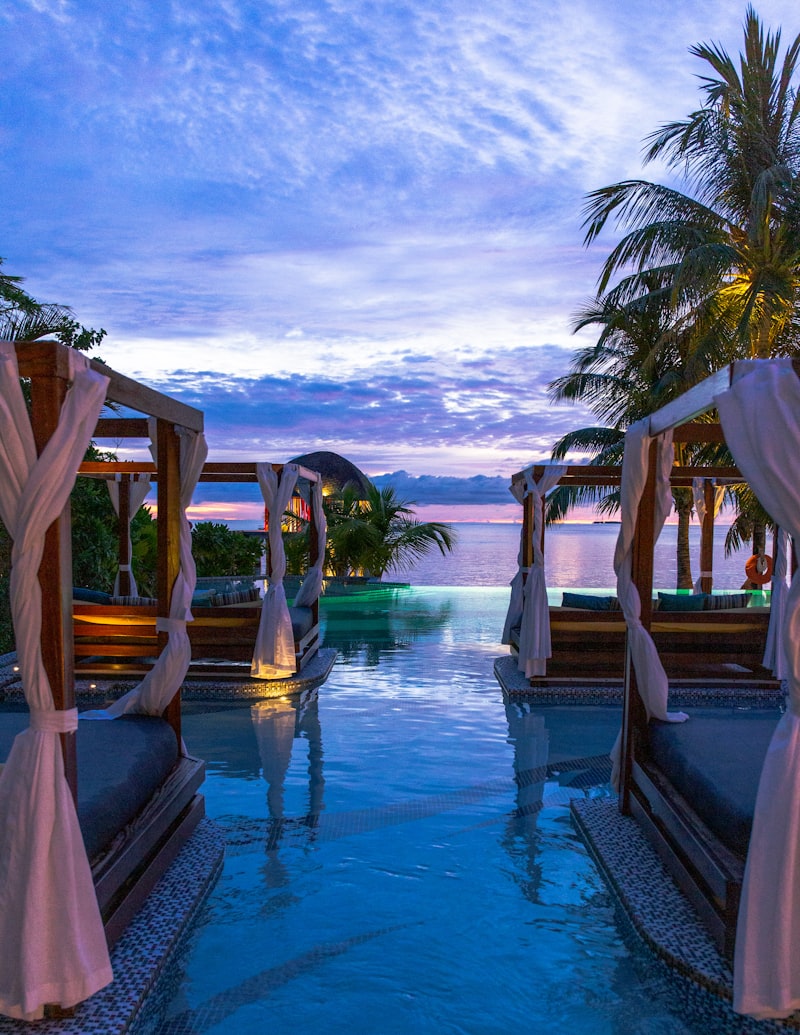
The genuine appeal of the private villa format in Cuba — beyond the obvious privacy — is the staffed accommodation experience. A full-service private villa in Old Havana or Vedado typically comes with a cook, a housekeeper, and a driver. Breakfast is prepared in the kitchen. Dinner is cooked to order. The driver — usually the owner of a classic American car or a well-maintained private vehicle — takes you wherever you need to go on a pre-agreed daily rate. For a group of four to six friends or a family traveling together, the per-person cost of a staffed private villa compares favorably to equivalent hotel accommodation while delivering something that no hotel can: the experience of Havana as a city resident rather than a guest.
Luxury Dining & Premium Activities
The most significant luxury upgrade available in Cuba doesn’t come from a hotel category — it comes from what you do with the time and money you’ve allocated. Cuba’s premium activity market is genuinely interesting and, compared to equivalent experiences in most Caribbean destinations, underpriced by a substantial margin.
Dining at the luxury level
Havana’s best restaurants are private paladares, not hotel dining rooms. This is worth stating clearly because the instinct to eat in a luxury hotel when staying at a luxury hotel is strong — and in Cuba, following that instinct means you’ll miss the actual best food the city has to offer. La Guarida (Concordia 418, Vedado) is Cuba’s most famous paladar: baroque, atmospheric, on the stairwell of a crumbling 1932 palace, serving food that consistently outperforms expectations and a cocktail list that includes some of the better rum combinations available in Havana. Reservations are essential and should be made in advance.
El del Frente, Vistamar, and O’Reilly 304 in Old Havana represent the next tier — well-managed private restaurants serving Cuban-international fusion that a restaurant-focused traveler will genuinely enjoy. The price points at all of these are remarkable by Canadian standards: a full dinner for two with cocktails and rum at a top Havana paladar runs $60–120 USD. The equivalent experience in Toronto or Montreal would cost three to four times as much.
Premium activities worth booking in advance
Cuba yacht charters give you access to reefs, secluded beaches, and coastline that is completely inaccessible from land. A private crewed day-charter from Havana Marina or Marina Hemingway runs $400–800 USD per day for a 4–6 person boat, including crew, snorkelling gear, and a skipper who knows where the uninhabited cays are. Multi-day charters accessing the Jardines de la Reina — Cuba’s protected southern reef system, some of the least-touched coral in the Atlantic — are available through specialist operators. For Canadians with diving or sailing interests, this is the experience that distinguishes a Cuba luxury trip from any other Caribbean luxury trip. Cuba yacht charter guide →
- Private classic car tour of Havana: Book a fully restored 1950s American convertible with a knowledgeable driver-guide for a half-day circuit of Old Havana, Vedado, Miramar, and the Malecón. Runs $80–150 USD for 3–4 hours. The combination of the car, the streets, and the guide’s context on what you’re seeing is the best single activity available in the city for a first-time visitor.
- Cigar factory tour and masterclass: The Partagás factory and H. Upmann factory in Havana run guided tours. Beyond the standard tour, specialist operators offer private cigar rolling masterclasses with a torcedor (roller) — two to three hours learning the process at a private bench, rolling several cigars to take home. Book in advance through the Hotel Nacional concierge or the Kempinski’s activity desk.
- Diving in the Jardines de la Reina: Cuba’s southern reef system is one of the best-preserved reef environments in the Atlantic and is accessible only through licensed operators. The reefs have shark populations that have been functionally eliminated from most other Caribbean zones. Access requires a live-aboard arrangement through Avalon, which runs the only licensed operation in the marine park. Advance booking is essential — spaces book months ahead for the peak December–March season.
- Horseback riding in Viñales: Viñales is a half-day drive from Havana through extraordinary tobacco country. Private horseback tours through the valley — organized through a private operator rather than the mass tourist circuit — give you access to working farms and viewpoints that the group tours don’t reach. Plan to spend the night in Viñales rather than doing it as a rushed day trip.
- Spa at the Kempinski: The Kempinski’s spa is the best in Cuba by a meaningful margin. Full-day packages including treatments, pool access, and lunch are available and represent a reasonable use of a rest day mid-trip.
What a Luxury Cuba Trip Actually Costs from Canada
The cash strategy for Canadian travelers
Cuba is cash-only for foreign visitors. No US credit cards, and non-US cards (including Canadian) work at very few ATMs and inconsistently. The practical approach for Canadians is to bring cash from home in a combination of Canadian dollars (which CADECA exchanges at market rates without penalty) and US dollars or euros as backup. The 10% penalty on US dollars doesn’t apply to CAD, so converting entirely to Canadian dollars before your trip and exchanging at CADECA in Cuba is the most cost-effective approach for Canadians. Exchange at CADECA bureaus in Havana or at the airport (the airport rates are slightly worse than in-city), not at hotels.
Realistic budget for a luxury Cuba trip from Canada
| Category | Budget Tier (CAD) | Premium Tier (CAD) | Notes |
|---|---|---|---|
| Return flights from Toronto | $500–800 | $900–1,400 | Economy vs Premium Economy/Business |
| Accommodation (7 nights) | $1,400–2,000 | $3,000–5,000 | Meliá vs Kempinski / private villa |
| Dining (paladares + resort) | $600–900 | $900–1,400 | Top paladares run $60–120 USD for two |
| Activities & experiences | $400–700 | $800–1,600 | Yacht charter day + diving + classic car |
| Cigars & rum | $200–400 | $400–800 | Official shop prices; tax-free to bring home to Canada |
| Travel insurance | $80–150 | $120–200 | Required; medical coverage essential |
| Total per person, 7 nights | ~$3,200–4,950 CAD | ~$6,100–10,400 CAD | At current exchange rates |
The peak Canadian travel window to Cuba — November through April — aligns with Cuba’s dry season: warm, low humidity, consistent blue skies, and sea temperatures in the 26–28°C range. January and February are the most popular months for Canadians (winter escape peak), which means flight and hotel prices are highest and availability tightest. Book November–December or March–April for the same weather at 15–25% lower cost and significantly better availability. The Christmas/New Year window (Dec 22 – Jan 5) sees the highest prices of the year across all accommodation tiers — book six months ahead if that’s your target window.
🇨🇦 CANADIAN LUXURY CUBA PRE-TRIP CHECKLIST
Frequently Asked Questions
Cuba’s luxury tier rewards the informed Canadian traveler
The Canadians who come back from Cuba talking about it the most are not the ones who spent two weeks in a Varadero wristband. They’re the ones who booked the Kempinski suite, organized the private classic car for the airport arrival, had dinner at La Guarida on night two, took the yacht charter on day four, and spent the last morning on the Nacional garden terrace looking at the same view that Winston Churchill looked at in 1946. That trip, from Toronto, takes less planning than a comparable luxury European destination, costs less, and delivers an experience that is genuinely irreplaceable.
Get the paperwork sorted before you fly (it’s simple for Canadians), bring enough Canadian dollars, and allocate the real budget to activities and experiences rather than room upgrades that aren’t the defining factor. Cuba’s luxury is mostly in what you do, not where you sleep. More planning resources at the ultimate first-timer’s guide to Havana and the complete Cuba travel tips guide.
