

Best Beaches in the Maldives vs Cuba: Luxury Island Paradise Compared
Two radically different visions of a perfect island holiday — one offers the world’s most perfectly engineered luxury beach experience, the other offers something far harder to manufacture.
This comparison is genuinely unusual because the two destinations are so different that it almost shouldn’t be a competition. The Maldives and Cuba don’t really compete for the same traveler in most cases — one is a $800-a-night overwater villa in a coral atoll, the other is a Caribbean island with more history in a single city block than the Maldives has accumulated in its entire tourist era. But they’re compared constantly, often by travelers deciding between a honeymoon destination or a luxury beach escape, and the comparison keeps circling back to the same unresolved question: is the Maldives premium actually worth it, and what does Cuba offer that the Maldives categorically cannot?
This guide answers both sides of that honestly. The Maldives wins more beach-specific categories than Cuba — that’s the straightforward truth, and pretending otherwise would be misleading. But there are specific traveler profiles for whom Cuba’s beach offer, combined with what surrounds it, makes it the stronger choice even against the world’s most celebrated island destination.
What You’re Actually Choosing Between
The Maldives is 1,192 coral islands spread across 26 atolls in the Indian Ocean, about 700 kilometres south-west of Sri Lanka. The entire national economy is built around tourism infrastructure — the resort island model, where each island hosts a single luxury property completely removed from anything resembling local life, has been perfected here over 50 years. The result is the world’s most technically accomplished beach tourism product: overwater villas with glass floors, house reefs of extraordinary marine richness directly off the jetty, a level of service consistency that few destinations globally can match, and a physical environment — white sand, turquoise lagoon, coral atoll — that is genuinely difficult to surpass anywhere on earth.
Cuba’s beach offer is different in almost every dimension. The beaches at Varadero, Cayo Guillermo, Cayo Coco, and Cayo Santa María are genuinely beautiful — Caribbean-grade white sand, warm clear water, healthy reef sections within swimming distance — but they exist within a country rather than as a substitute for one. Cuba has culture, history, music, cities, and a particular way of life that no other Caribbean destination replicates. The beach experience in Cuba is surrounded by something else; the Maldives beach experience is surrounded by ocean.
The 30-Second Side-by-Side

- Overwater villas with glass floors over coral lagoon
- World-class house reef snorkelling directly from your villa
- Top-5 global dive destination — manta rays, whale sharks
- Ultra-luxury service standard — private butlers, infinity pools
- Seaplane transfers from Malé — $350–700 per person each way
- Zero cultural infrastructure — this is the point
- Best for: pure luxury, honeymoon, serious divers, water life
- Excellent Caribbean beaches — Varadero, Cayo Guillermo, Cayo Santa María
- All-inclusive resort model at 20–40% of Maldives cost
- Havana — one of the world’s most culturally compelling cities
- Good snorkelling; excellent restricted diving (Jardines de la Reina)
- No overwater accommodation — this is an absolute gap
- Cash-only economy; US cards don’t work
- Best for: culture + beach combination; budget; honeymooners wanting both
Beach Quality — Sand, Water, and the Physical Environment
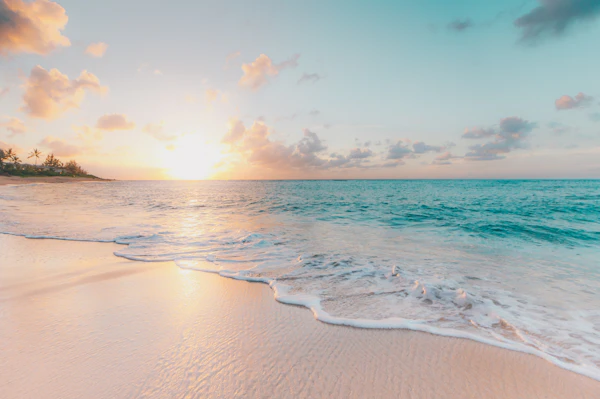
The Maldivian beach is a specific physical phenomenon. The atolls are formed from coral reef systems that have been building for millions of years, and the beaches themselves are composed of coral sand — the fine, almost chalk-white powder that photographs in that signature brilliant white. The lagoon water is shallow, warm (typically 28–30°C year-round), and has a clarity that verges on implausible: visibility of 20+ metres in calm conditions, water colour ranging from the palest aquamarine to deep turquoise depending on depth and time of day. There is no current in most resort lagoons. There are no waves in most resort lagoons. The experience is as close to swimming in a warm, perfectly still, slightly salty pool — except the pool is an actual atoll — as the natural world provides.
Cuba’s best beaches are genuinely excellent Caribbean beaches, and it’s important not to undersell them. Playa Pilar at Cayo Guillermo consistently appears in lists of the world’s top beaches — the natural sandbar that extends into shallow turquoise water creates conditions of unusual beauty, and the reef immediately offshore produces coral garden snorkelling that’s a legitimate experience rather than a tokenistic amenity. Varadero’s 20km peninsula of white sand rivals any beach in the Caribbean for sheer scale. The best beaches in Cuba for 2026 covers the full national ranking.
Where they differ: Cuban beaches face the Atlantic and Caribbean with all that implies — there are waves, there are currents, there is sometimes seaweed, and the clarity, while good, doesn’t approach the Maldivian lagoon standard. Cuban beach water is warm, clear, and genuinely inviting. Maldivian lagoon water is in a different category entirely. The gap is real, but the magnitude depends entirely on whether you’re comparing Cuba’s best (Playa Pilar) against a typical Maldives beach resort or against the Maldives’ best.
Diving & Snorkelling — Underwater Worlds Compared
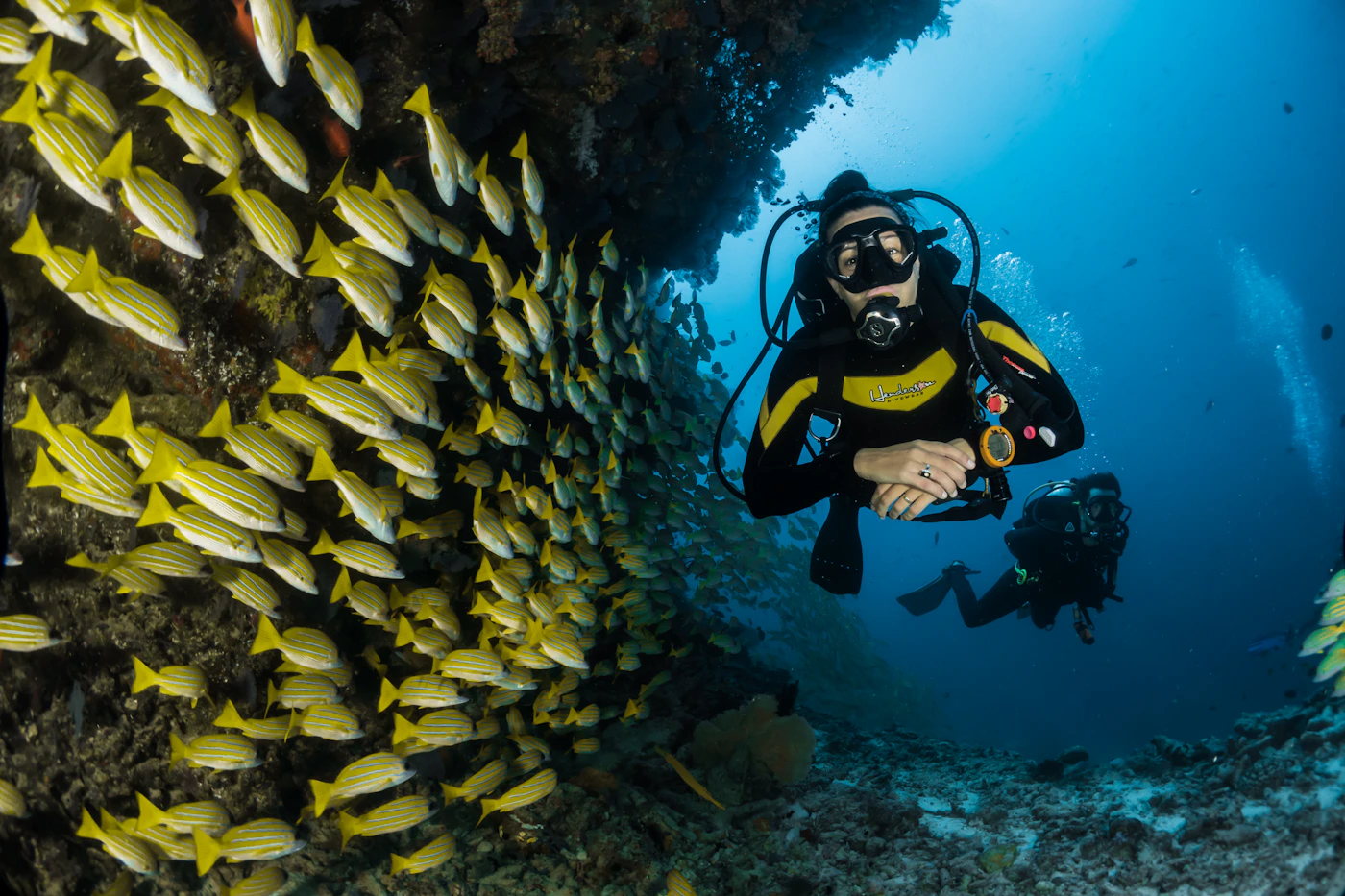
The Maldives is consistently listed among the world’s top five dive destinations. The reason is not just the coral health (which is exceptional, particularly in atolls less affected by El Niño bleaching events) but the megafauna. Manta rays gather at cleaning stations throughout the atolls year-round. Whale sharks aggregate in the northern atolls seasonally. Grey reef sharks patrol the outer reef walls. The sheer volume of large marine life accessible without specialist expedition logistics — on a house reef dive directly off the jetty of most resorts — is genuinely unusual by global standards. Snorkelling is equally rewarding: the house reef at most Maldivian resorts offers turtle encounters, reef shark sightings, and coral gardens that would be the centrepiece of a dedicated snorkel trip at most other destinations.
Cuba’s diving reputation is more complex and less accessible. The Jardines de la Reina (Gardens of the Queen) in the south of Cuba is by conservation assessment one of the Caribbean’s most pristine marine environments — near-pristine coral health, significant shark populations (including bull sharks), and whale shark seasonal sightings. This is world-class diving that stands comparison with the Maldives. The complication: Jardines de la Reina is a protected marine reserve accessible only via live-aboard expeditions with a limited number of permitted operators. Most Cuba visitors — even dedicated divers — don’t access it. The more typical Cuba diving from the northern cayos and snorkelling from Varadero is good but not Maldivian. The gap between average-accessible Cuba diving and average-accessible Maldives diving is significant.
Accommodation — The Overwater Villa Question
The overwater villa is the Maldives’ architectural signature and its single most powerful differentiator from every other beach destination. Staying in a structure built over a coral lagoon, with a glass floor showing the reef below, a private deck for direct water entry, and a view from bed to the Indian Ocean horizon — this is a genuinely unique experience that no other destination replicates at scale. The closest overwater options to Cuba require traveling to Belize, French Polynesia, or the Maldives itself. Cuba has no overwater accommodation. This is not a minor gap.
Beyond overwater villas, Maldivian resorts compete on the same dimensions: infinity pools that appear to extend into the lagoon, private beach sections, spa facilities designed with the same care as the accommodation itself, and a level of service that operates on guest-to-staff ratios that most Caribbean resorts can’t match (many Maldives resorts run a 1:1 or better guest-to-staff ratio).
Cuba’s best all-inclusive resorts — particularly the Paradisus Princesa del Mar and Meliá Las Américas — are genuinely good. The top Cuban five-star properties offer real luxury by Caribbean standards. But the ceiling is different. The most exceptional Cuba resort experience involves a high-quality beachfront room with good service and a pool that overlooks the sea. The Maldives baseline involves a private bungalow over the ocean. The categories are genuinely different.
Cost — The Category Where Cuba’s Advantage Is Decisive
The Maldives is expensive in ways that compound. The base rate for a decent overwater villa starts around $500–800 per person per night (double occupancy, half-board). Add seaplane transfer from Malé (typically $350–700 per person each way), meals beyond the included plan (many resorts price individual dishes at restaurant-level pricing), excursions, and the premium that comes with being on an island where everything must be brought in by boat or seaplane. A week in the Maldives for two people, including flights, typically costs $8,000–20,000+ depending on the resort tier. The budget Maldives, staying at guesthouses on local islands, exists and costs significantly less — but that’s a different product from the resort experience this comparison covers.
Cuba’s all-inclusive beach resorts typically run $80–350 per person per night depending on quality tier and season — a fraction of comparable Maldives rates. Flights to Cuba from Europe, Canada, and the US are significantly cheaper than Malé-bound itineraries (which typically require connecting through Dubai, Singapore, Doha, or similar). The Cuba cost breakdown shows that a week at a good Cuban all-inclusive resort for two people including flights runs $3,000–6,000 from most European and Canadian origins — half to one-third the Maldives cost for comparable holiday duration.
Flights to Malé (MLE) via Gulf carriers (Emirates, Etihad, Qatar) appear as error fares several times a year — the routing complexity creates more opportunities for pricing mistakes than simpler point-to-point routes. If the Maldives is on your bucket list, the error fare alert system is worth running on MLE routes specifically. A business class error fare to Malé — which appear somewhat regularly on Gulf carrier routes — transforms the economics of a Maldives trip substantially.
Culture & Experience Beyond the Beach
The Maldives has no cultural tourism infrastructure because the resort island model was designed to eliminate the need for it. You arrive at Malé airport, transfer immediately by seaplane to your resort island, and spend the week in an environment that has been constructed for maximum comfort and natural beauty — but contains essentially zero authentic local culture. The Maldivian local population lives on different islands from the resort islands. The staff who serve you are from Sri Lanka, India, Bangladesh, and the Philippines as much as from the Maldives. There are no colonial cities, no music scenes, no street food cultures, no museums, no revolutionary history. The Maldives experience is between you, the ocean, and the resort.
For some travelers — and this is genuinely a valid preference — the absence of cultural obligation is the entire point. Going to the Maldives means disconnecting from the demands of a travel itinerary. There’s nothing you “should” see because there’s nothing to see. It’s a total environment for rest, water, and luxury.
Cuba is the opposite. Havana is one of the most culturally layered and compelling cities in the Western Hemisphere. The first-timer’s Havana guide captures what the city actually offers; it’s a place where the architecture, music, history, and daily street life combine to produce an experience unlike anywhere else accessible from Europe or North America. Trinidad, Cienfuegos, Santiago de Cuba — the country has a depth of experience that no Maldivian atoll can approach. The hidden gems in Cuba guide shows what most tourists miss even within this remarkable cultural landscape.


Honeymoon & Romantic Getaways
The Maldives is the most commonly cited honeymoon destination globally, and the reasons are obvious: a private overwater villa over a coral lagoon, a private deck for sunset cocktails, a house reef for morning snorkelling, and service so attentive that the entire holiday feels orchestrated around the two of you. It’s a specific kind of luxury romance — total, managed, effortless, and physically extraordinary.
Cuba for a honeymoon requires a different framework. The Cuba honeymoon guide covers the specific choices that make it work: the Paradisus Princesa del Mar at its Royal Service tier, a private colonial casa in Havana for the city portion, the particular combination of Havana cultural immersion and cayo beach time that turns a Cuba honeymoon into a genuinely memorable trip rather than just a holiday. The perfect luxury honeymoon Cuba itinerary maps this in detail. A Cuba honeymoon is more adventurous and less effortless than a Maldives one — but many couples specifically want a honeymoon that involves more than sitting perfectly still in a villa.
The Scorecard
The Verdict — And the Traveler Types Who Should Still Choose Cuba
“The Maldives wins on beach metrics. Cuba wins on everything else. The question is what you’re actually paying for — and whether the overwater villa justifies the 3x price premium over a genuinely beautiful Caribbean beach holiday.”
Overall winner for pure beach and ocean experience: The Maldives. This shouldn’t surprise anyone, and softening it would be dishonest. The coral lagoon, the overwater villa, the house reef megafauna, the food quality, and the service standard combine to produce a beach and ocean holiday that no Caribbean destination — including Cuba’s best — replicates at the same level. The Maldives won five categories including the three that most directly define a luxury beach holiday (beach, diving, accommodation). If the purpose of the trip is a luxury ocean experience and nothing else, the Maldives is the correct answer.
Cuba is the right choice if you are:
- A traveler for whom cultural depth is not a nice-to-have but a core part of what makes a holiday memorable — the Maldives offers nothing of that kind, by design
- Planning a honeymoon that you want to remember as a genuine travel experience, not a managed luxury product — Cuba honeymoons are more vivid, more varied, and more conversationally interesting five years later
- Constrained by budget — the 60–70% cost saving relative to the Maldives is substantial, and Cuba at its best delivers genuinely excellent beach and resort quality for that investment
- A traveler who wants the Caribbean beach experience without the homogenised resort atmosphere — Cuba’s beach resorts exist in a genuinely unique country, and that context matters
- Someone who has already done the Maldives and wants the other kind of island holiday — the one with cities and music and paladares and architecture that looks nothing like anything built in the last fifty years
Once you’ve decided Cuba over the Maldives, the next comparison is within Cuba itself. Varadero or the northern cayos? Pure beach or city plus beach? All-inclusive or independent? These are the questions that determine the actual quality of a Cuba beach holiday, and the site has extensive guides on each one.
