

Holguín vs Santiago de Cuba: Comparing Cuba’s Two Main Eastern Cities
Two cities, one province apart. One is Cuba’s garden city — parks, beaches, and an easy-going pace. The other is its most culturally explosive — history, music, and the deepest Afro-Cuban identity on the island.
Most itineraries for Cuba stop at Havana, maybe add Trinidad, and call it done. The eastern half of the island — where Cuba’s most historically significant cities, its most African-influenced culture, and some of its least-visited terrain all sit — gets left off. That’s understandable for a first trip. For a second trip, or for anyone building a Cuba itinerary that actually includes the east, the comparison between Holguín and Santiago de Cuba is the one that needs settling.
These are genuinely different cities. Holguín is Cuba’s fourth-largest, known as the “City of Parks” for its succession of plazas and green spaces — a relaxed, agricultural city with a surprisingly good access point to nearby beach resorts. Santiago is Cuba’s second-largest and most historically charged — the city where the revolution was planned, where Afro-Cuban music was born, where the Bacardí rum empire started, and where Cuba’s most spectacular carnival ignites the streets every July. The choice between them isn’t just about preference. It’s about what kind of eastern Cuba experience you’re actually looking for.
Jump to section
Two Cities, One Eastern Cuba
The eastern orient of Cuba — the Oriente region — was historically the most politically combustible part of the island. The Ten Years’ War, the Spanish-American War, the 1953 Moncada assault, the 1956 Granma landing and the Sierra Maestra campaign — all of it centred on the east. Both Holguín and Santiago de Cuba carry that history, but they wear it differently.
Holguín is a city that feels like it’s in the process of becoming rather than being defined by its past. Its colonial centre is intact and pleasant without being overwhelming. Its airport (Frank País International, HOG) is one of Cuba’s most important gateways — many Canadians fly directly into Holguín rather than Havana specifically because of its proximity to Guardalavaca, a beach resort complex about 45 minutes north. The city itself has a comfortable, unhurried energy that makes it a genuinely good base for eastern Cuba exploration without the intensity of Santiago.
Santiago de Cuba is a different proposition entirely. The most African-influenced city in Cuba, the birthplace of son music, the spiritual home of Cuban carnival, the city of Castro and Céspedes and Maceo — Santiago carries a cultural weight that’s palpable from the moment you arrive. It sits dramatically on a bay surrounded by hills, and the Sierra Maestra mountains loom to the west. It’s hotter than the rest of Cuba, more Afro-Caribbean in its music and religion, more intense in its politics, and more rewarding as a cultural destination than any city in Cuba outside Havana. The Santiago de Cuba guide gives the full city deep-dive.

The 30-Second Side-by-Side

- “City of Parks” — pleasant plazas, colonial centre, green and walkable
- Direct international flights (HOG airport) — no Havana transfer needed
- 45 minutes to Guardalavaca beach — one of Cuba’s best resort zones
- Less intense than Santiago — better for slower-paced travel
- Excellent day-trip hub for eastern Cuba sites
- More affordable than Santiago on average
- Best for: beach-focused trips, first-time eastern Cuba visitors, families

- Cuba’s most historically charged city — revolution, music, culture
- Strongest Afro-Cuban cultural presence in the country
- Birthplace of son cubano — Casa de la Trova here is the original
- Cuba’s finest carnival (July) — genuinely world-class event
- Castillo del Morro, Cementerio Santa Ifigenia, Moncada Barracks
- More demanding city — busier, hotter, more intense than Holguín
- Best for: culture seekers, music lovers, history enthusiasts, cyclists finishing the island route
10 Rounds Compared, Honestly
Round 1: Historical & Cultural Significance 🏛
Santiago de Cuba wins this round by a margin so wide that the comparison is almost unfair. The city was Cuba’s first capital. It’s where the attack on Moncada Barracks launched the revolution in 1953. It’s where Fidel Castro delivered his declaration from a Jeep on January 1, 1959, announcing victory. The Cementerio de Santa Ifigenia holds José Martí, the Mambí generals of Cuba’s independence war, and Fidel Castro himself. The Cuartel Moncada — the barracks attacked on July 26, 1953 — is now a school and museum where bullet holes in the walls are preserved as they were left.
Holguín’s historical significance is real but different in scale. Parque Calixto García honours the general who led the local independence campaign. The city has several decent museums and a pleasant colonial centre. The Loma de la Cruz — a hilltop with a cross and panoramic views over the city — is the most distinctive landmark. None of this competes with Santiago’s revolutionary heritage.
Round 2: Music & Nightlife 🎵
This is Santiago’s defining advantage and the reason many travelers make the journey specifically. Cuban son music — the rhythmic foundation of salsa and much of the world’s popular music for the last century — was born in Santiago de Cuba and the surrounding region. The Casa de la Trova on Heredia Street is considered the original and best; it’s been running since 1968 and the standard of musicians who play there, particularly for afternoon and early evening sessions, is exceptional. Music spills into the streets around Parque Céspedes on weekend evenings. The Patio de los Dos Abuelos jazz venue, the Tumba Francesa for Afro-Haitian music, the numerous pequeños conjuntos that play at street corners and in bar patios — Santiago’s live music scene is the richest in Cuba outside Havana.
Holguín has music, as every Cuban city does. The Casa de la Trova in Holguín operates and has genuine musicians. The nightlife in the Plaza Julio Antonio Mella area is decent. But it doesn’t approach Santiago’s intensity or variety. The carnival season guide covers Santiago’s July carnival specifically — a week-long event that’s considered Cuba’s most spectacular and among the best carnivals in the Caribbean.
Round 3: Architecture & Walking 🚶
Both cities are genuinely walkable in their historic centres. Holguín’s flatness gives it an advantage for casual walking — the series of plazas connected by pedestrian streets makes it easy to spend a morning wandering without tiring. Parque Calixto García, Parque Peralta, Plaza San José, and Parque de los Flores form a pleasant connected circuit. The architecture is colonial without being UNESCO-level dramatic.
Santiago is hilly — dramatically so in some sections — which makes walking more demanding but the city more visually interesting. Parque Céspedes, surrounded by the Cathedral of Our Lady of the Assumption, the Casa de Diego Velázquez (Cuba’s oldest surviving building), and the Casa Grande Hotel, is one of the great urban squares in the Caribbean. The climb up to the Padre Pico steps and down through Tivoli (Santiago’s most atmospheric neighbourhood, with strong Haitian cultural influence) is one of the best urban walks in Cuba. The dramatic bay view from various hilltop points in the city is unlike anything Holguín offers.
The Castillo del Morro (San Pedro de la Roca) guards Santiago’s bay entrance and is one of the finest preserved Spanish fortresses in the Americas — UNESCO World Heritage listed. It’s 10km from the city centre and absolutely worth the trip. The combination of the fortress, the bay view, and the cannon-shot ceremony at sunset is one of the best afternoons in eastern Cuba. Holguín has no comparable site.
Round 4: Food & Dining 🍽
Santiago’s more diverse cultural heritage — Spanish, African, French Haitian, and Caribbean all feeding into the local culinary tradition — produces a more interesting food scene than Holguín’s. The Afro-Cuban and Haitian influences show up in dishes and seasonings that are specific to the eastern provinces. Seafood is excellent, with the city’s bay position producing fresher access than inland Holguín. The paladar scene in Santiago has improved significantly and includes some genuinely ambitious cooking for a Cuban city outside Havana.
Holguín’s food scene is functional rather than distinctive. The city has paladares, state restaurants, and pizza counters in roughly the same ratio as any Cuban city of its size. The proximity to the coast via Guardalavaca means seafood is available. But there’s no specific culinary identity that would bring food-focused travelers to Holguín specifically. The Cuban food guide covers the dishes worth seeking out in both cities.
Worth knowing: both cities are significantly more limited in dining variety than Havana, and neither has anything approaching the paladar scene of Trinidad or Havana’s Vedado district. Adjust expectations accordingly.
Round 5: Beach Access 🏖
This is Holguín’s strongest round and the main reason many international visitors — particularly Canadians and Europeans flying into HOG — choose it over Santiago.
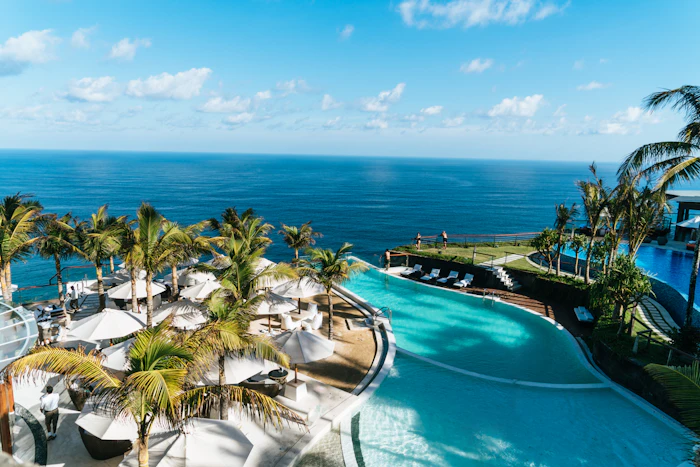
Guardalavaca, 45km north of Holguín city, is Cuba’s third most important beach resort zone after Varadero and the Cayo archipelago. Playa Esmeralda and Playa Pesquero are genuinely excellent beaches — fine sand, protected bay, good water clarity, and a reef accessible for snorkelling. The hotel zone there is well developed (Iberostar and Memories properties dominate) and the beach quality rivals Varadero’s better sections. Several of Cuba’s best beaches are in or near Holguín Province.
Santiago has beaches accessible by local transport — Siboney beach is 19km from the city centre, Playa Cazonalda and Playa Bucanero are 6–8km south on the coast road. These are pleasant local beaches but they’re not in the league of Guardalavaca. Most Santiago visitors don’t come for the beach; they come for the city. If beach time is a significant part of your eastern Cuba trip, the logistics strongly favour Holguín as your base.

Round 6: Ease of Access & Getting There ✈️
Holguín wins this round on a technicality that matters enormously to a specific traveler demographic. Frank País International Airport (HOG) receives direct charter flights from Canada — Air Transat, Sunwing, Air Canada Vacations — as well as from the UK and some European cities during peak season. This means many travelers can fly directly from Toronto, Calgary, or London to Holguín without the Havana routing that Cuba’s other airports require. For beach-focused travelers who want to arrive, check in, and be on a sunlounger within a few hours, this is a genuine advantage.
Santiago’s Antonio Maceo Airport (SCU) receives domestic flights from Havana (45 minutes, multiple daily) and some international charters. The overland options from Havana — Viazul bus at 15 hours or a domestic flight — are the standard approaches. For travelers cycling across Cuba, Santiago is the natural end point. The Viazul bus guide and the getting around Cuba guide cover both cities’ transport connections in detail.
Round 7: Accommodation & Value 🏨
Both cities have the standard Cuban accommodation mix: casas particulares at $30–55/night, a handful of state hotels, and a very limited boutique offer. Holguín has the additional option of the Guardalavaca resort zone, which provides the all-inclusive hotel experience that neither city centre particularly offers.
Santiago has marginally better accommodation options in the city centre — the Hotel Casa Grande on Parque Céspedes is historically one of Cuba’s more charming city hotels (famous for Graham Greene reportedly writing there), and the colonial centre has several well-maintained casas in excellent locations. The city is busy enough that casas are generally well-booked in advance during peak season and during carnival (July) specifically.
Holguín’s city centre casas are cheaper on average and easier to book at short notice than Santiago’s. For budget travelers, the hostel vs casa comparison covers the full options. For value, the Cuba on $50 a day framework applies in both cities, with Holguín at the lower end of that range.
Round 8: Day Trips & Surrounding Region 🗺
Both cities are excellent day-trip hubs for eastern Cuba’s considerable historical and natural attractions.
From Holguín: Guardalavaca beach (45km), the pre-Columbian archaeological site at Chorro de Maíta (one of Cuba’s most important indigenous heritage sites), the Parque Nacional Cristóbal Colón near Banes, and the small town of Gibara (a charming colonial port town that’s genuinely off the tourist trail — one of Cuba’s most hidden gems).
From Santiago: the Castillo del Morro UNESCO fortress (10km), El Cobre basilica (copper mining town with Cuba’s patron saint, 20km), the Sierra Maestra foothills including Pico Turquino (Cuba’s highest peak at 1,974m, accessible via challenging multi-day hike), the Gran Piedra (a massive boulder with panoramic views at 1,234m, 28km), and Chivirico coastal road (dramatic mountain-sea coastal drive heading west).
Santiago’s day-trip landscape is marginally richer in terms of historical and natural variety, but Holguín’s combination of beach access and indigenous heritage sites is more useful for a beach-focused trip.
Round 9: Ease of Navigation & Visitor Experience 🧭
Holguín is an easier city to navigate as a first-time Cuba visitor. The flat terrain makes walking between sights manageable. The city is compact enough that most points of interest in the historic centre are within 20 minutes on foot. The visitor infrastructure — guides, tour operators, casa hosts who speak some English — is well geared toward the international visitors arriving at HOG airport for resort trips, which makes information and logistics more accessible.
Santiago’s hilly terrain, busier streets, and more intense street-level tourism activity (jinetera activity is more visible in Santiago than Holguín) make it a slightly more demanding city for first-timers. The Cuba travel scams guide is worth reading before visiting Santiago specifically — not because it’s unsafe, but because the hustle around the tourist sites requires a calibrated response. Basic Spanish is more genuinely useful in Santiago than in Holguín, where resort-area tourism has produced more English comprehension among service workers.
Round 10: Cultural Depth & Uniqueness 🎭
Santiago de Cuba is the only city on this island — or arguably in the Caribbean — that combines this specific set of ingredients: the deepest Afro-Cuban cultural heritage in the country, the birthplace of son music and the home of its finest living expression, the revolutionary epicentre of Cuban history, a distinct Haitian-French cultural overlay in the Tivoli neighbourhood, the Santería religious practice visible and open rather than hidden, and a civic pride and intensity that makes the city feel genuinely consequential.
Nothing in Holguín competes with this. Holguín is a pleasant, interesting Cuban city. Santiago is a culturally singular city that rewards extended time and genuine engagement. The gap between them in this category is larger than any other in this comparison.
“Santiago doesn’t feel like a city that’s performing for tourists. It feels like a city that has been continuously, intensely itself since 1515 and simply hasn’t gotten around to adjusting for your visit. That’s not a criticism. It’s the whole point.”
The Final Scorecard
The Verdict — And Why Many Travelers Should Do Both
Overall winner: Santiago de Cuba. For most travelers who have specifically decided to visit eastern Cuba, Santiago’s cultural offer — the music, the history, the architecture, the food, the extraordinary Castillo del Morro — makes it the more rewarding city to spend time in. Six wins in ten rounds reflects a genuine quality gap in the categories that define what a city visit is actually for.
But here’s what the scorecard doesn’t tell you:
Holguín is the right choice if:
- You’re flying into HOG directly and want immediate beach access at Guardalavaca without driving past Santiago
- You’re traveling with children or companions who want significant beach time alongside city exploration
- You want eastern Cuba at a lower intensity — Holguín is gentler, less demanding, and easier for travelers who find Santiago’s pace overwhelming
- You’re on a budget and the cheaper accommodation and food in Holguín makes a material difference
- You want to use it as a base for day trips to Gibara and the Holguín Province sites that Santiago can’t access as easily
The real answer for most travelers: visit both. They’re 65km apart — less than two hours by taxi or shared colectivo. A well-structured eastern Cuba itinerary gives Santiago 3–4 days (for the city, the Morro, El Cobre, and Tivoli neighbourhood) and Holguín 1–2 days with a trip to Guardalavaca. The one-week Cuba itinerary and the 10-day Cuba budget itinerary both address how the east fits into a full-island plan. For cyclists finishing the Havana-to-Santiago route, Santiago is the natural and rewarding endpoint — Holguín sits conveniently 65km before the finish.
If you’re visiting eastern Cuba and can make any section of your trip fall in late July, Santiago’s carnival (Carnival de Santiago de Cuba, typically the last week of July) is worth building your itinerary around. It’s Cuba’s most spectacular civic event — street floats, massive comparsa dance troupes, live music everywhere simultaneously, and a level of collective energy that genuinely needs to be seen to be understood. The Cuba carnival season guide covers it in detail. Holguín’s equivalent celebrations are pleasant but operate on a completely different scale.
